contact & rep

about
reviews & articles

exhibition history
publications & bibliography
edu, exp, collections, etc.

tech notes & credits
For occasional announcements,
add your email and [enter]:

Staff:

Mark Beasley - code, graphics
Michelle Graves - design, research
Alex Dunn - data wrangler, 3D trooper


Technical Notes and Acknowledgements (or geek talk):

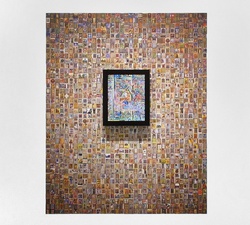
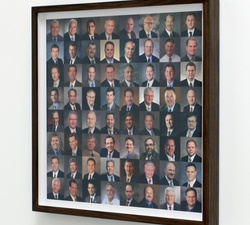
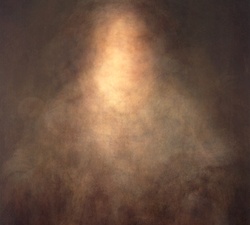
Most of the early amalgamation print work (Playboy, Class of, Homes, 76Bjs) was made with code I wrote in C on Unix-based SGIs using the great Paul Haeberli's SGI file format.

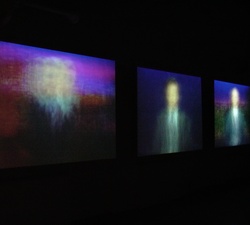
The The Grand Unification Theory pieces were also written in C on SGIs and the data was gathered using a capture board on an Indy. I used a bunch of Unix scripting (grep, sort, etc) to organize & rank the captured frames.

More recent amalgamation work (Decades, Late Night, Special Moments) was done in C/C++ on Windows boxes with the ImageMagick C++ libraries. Andres Laracuente helped a ton with gathering source material for Special Moments. I did The Song of the Century manually with PC audio software (I honestly cannot remember what software, but I did download a few of the cover songs with the original Napster).

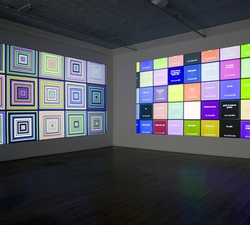
I wrote the software for Everything, All at Once (Part I & Part II) in C for the SGI O2 platform using their DMedia libraries. Big thanks to Todd Margolis for helping out with DMedia coding. I did Everything, All at Once (Part III) in C# for PCs using a nice Directshow .NET port and some off-the-shelf TV-board hardware.

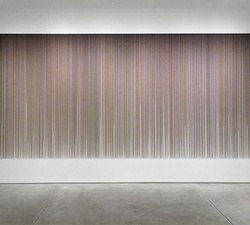
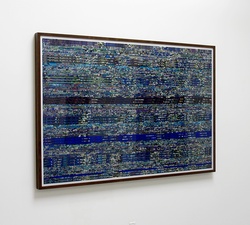
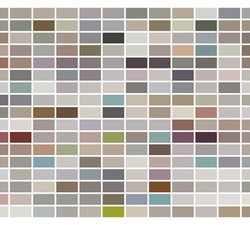
The software for the "color-per-frame" print work (Titanic, MTV, Emblem) was all written in C/C++ on PCs with earlier versions of ImageMagick. Frame capture was done with available capture hardware. Related video work (Top 6 & Top 25) was done similarly, with finishing in After Effects.

Earlier data abstraction work (Shoes, Yellow Dots, Height & Weight) was done with a combination of C & MEL (and tons of raw data). They were then built and rendered with early versions of Maya.

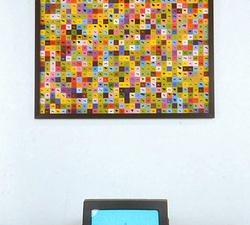
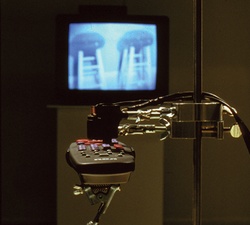
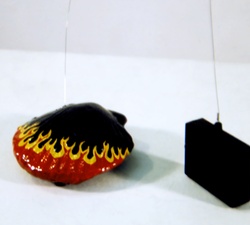
My only real robotic work to date, Self Portrait (The Jason Salavon Show), was controlled by a big ole HyperTalk program running on my first real computer, a Macintosh SE. The "robot" was 2 solenoids, controlling a TV remote, interfaced to an EZIO board.

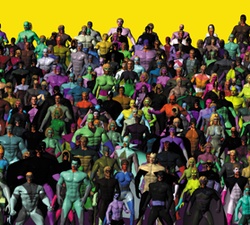
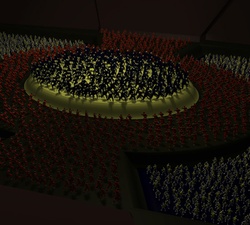
The figures in Diagram for the Apprehension of Simple Forces were arranged from a template I drew, by a C plugin I wrote for Alias PowerAnimator 7. I rendered it on an Onyx over many, many nights at one of my old video game jobs, the long defunct Viacom New Media.

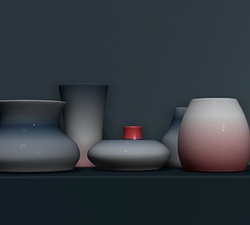
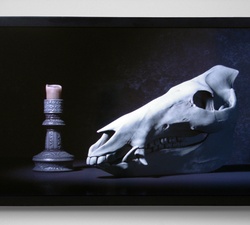
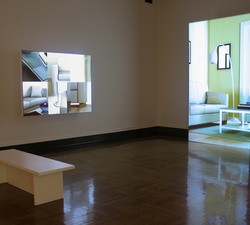
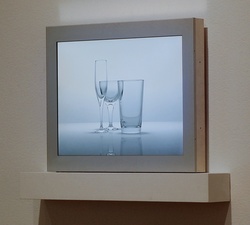
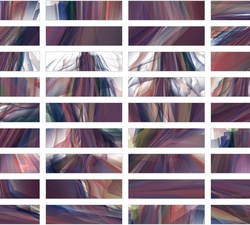
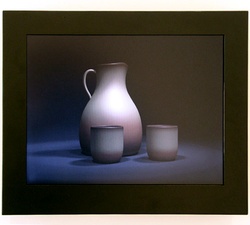
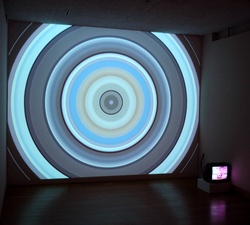
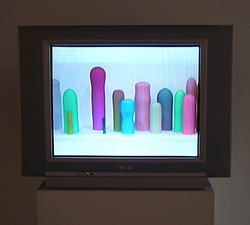
The two recent 3d-animated video pieces (Form Study, Still Life), though constructed differently from one another, were both rendered in Maya. Form Study was completely auto-generated with a combination of C & MEL code. The continuous video was assembled with a C/ImageMagick app I wote. Still Life is essentially a hand-made and -designed work with some custom MEL tools thrown-in. Travis Saul helped a ton with the dedicated "movie player" app.

Chris Reilly was a big help with code, 3d, and fabrication problems on numerous projects as well as doing a ton of work on this website.


MANY MORE NOTES & CREDITS COMING.


Copyright © 1997-2010 Jason Salavon